
What happens when I get my period?
Each month, the uterus gets ready for a potential pregnancy - this monthly cycle is known as the menstrual cycle. The lining of the uterus thickens into a cushion of blood vessels, glands and liquid. If you become pregnant, this lining will be what nourishes a fertilised egg (an egg which has been joined by a sperm) if the egg attaches. If the egg does not attach, then the lining (mostly blood and some fluid) passes out through the vagina. This bleeding is called a period, or menstruation.
How long does my period last?
A period generally lasts about 5 days but you may bleed for as little as 2 days, or sometimes for as many as 8. This range is totally normal.
The menstrual cycle generally takes 28 days but may be shorter or longer. The first day of bleeding in each menstrual cycle is called Day 1.
During the first 2 or 3 years, your period may be very irregular. You might have 2 in a row and then go several months without having a period at all. You will also find that your blood flow varies (it might be heavy, or light) on different days of your period. This is completely normal and the pattern will differ for everyone.
How old will I be when I first get my period?
There is no way of knowing when your first period will come. It will probably arrive sometime between the ages of 9 and 15 years. But it may be earlier or later. Every person is different. If you have not begun to menstruate by the time you are 17, talk to your doctor about it. People usually stop having their periods between the ages of 45 and 55. This is called menopause.
Will I get period pain?
People will often experience a range of physical and emotional symptoms before and during their period. This is often referred to as premenstrual syndrome (PMS). Mood swings are a common symptom of PMS. Some people might feel a bit emotional before their period, and others might feel irritated or short-tempered. Not every person experiences these symptoms and they soon disappear after the period starts.
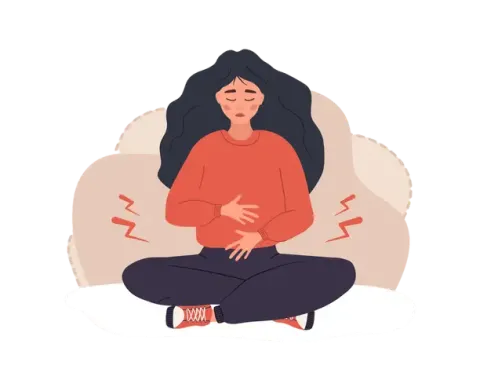
Just before a period begins, you might feel an uncomfortable ache in the stomach or pelvic area. This can last for the first 12 hours. Some people say they feel more bloated and heavy at this time. Some people experience slight diarrhoea just before a period. Constipation is common too. If this happens to you, drink more water, eat extra fruit and vegetables as well as wholemeal bread and cereals. Try to exercise regularly. You should not have to use laxatives.
Some people experience cramping and stomach pain during their periods. If you do have pain during your period, try some stretches and exercise, or curl up with a heated wheat bag or a hot-water bottle on the painful area. If this doesn’t work, it is possible to take pain relief. Talk to a parent, doctor or the chemist about what kind of relief will be appropriate for you.