
Emergency contraception
Emergency contraception (EC) can be used to reduce the chance of pregnancy if contraception was not used or if contraception fails (e.g. condom breaks, or contraceptive pills missed).
There are 2 types of emergency contraception available:
- Emergency contraception pill (ECP)
- Copper intrauterine device (IUD)
When should you use it?
Emergency contraception should be used if:
- you didn't use any contraception.
- you forgot to take the contraceptive pill
- you had vomiting or diarrhoea or had to go on particular antibiotics, which can make the pill ineffective
- you didn't use a condom
- the condom broke or came off
- you have been sexually assaulted

Emergency contraception pill (ECP)
The ECP is sometimes called the 'morning after pill'. This is incorrect. Although it’s more effective the sooner it’s taken, it can be taken up to 5 days after unprotected sex depending on the ECP you take. It is best to check with your doctor or pharmacist which ECP is best for you.
There are two types of ECPs:
Levonorgestrel emergency contraceptive pill (LNG-ECP). This is best taken up to 96 hours (4 days) after unprotected sex.
Ulipristal acetate emergency contraceptive pill (UAP-ECP). This can be taken up to 120 hours (5 days) after unprotected sex and is more effective for people weighing over 70kg.
ECPs do not prevent implantation of a fertilised egg but they do work by stopping or delaying the release of an egg by the ovary (ovulation).
If the ECP is accidentally taken during pregnancy it does not cause harm to the developing embryo or foetus.
The ECP does not cause an abortion.
You can get the EC pill from the chemist, your doctor or a sexual health clinic.
The chemist will need to ask you a few personal questions (about when you last had sex and when your last period was) and they may ask you to fill in a form. This is just to help decide the best method of EC for you. They should offer you a private place to do this. If they don't, you can ask, 'Is there somewhere private I can answer these questions?'
It is most likely to fail if any of the following situations occur:
- you are already pregnant
- you vomit within 2 hours of taking the pill
- you have unprotected sex after taking the pill.
It's highly recommended that you see your doctor or sexual health clinic 3 weeks after taking the pill to make sure that it has worked properly.
EC does not protect against sexually transmissible infections (STIs). If you have unprotected sex, you and your partner may need to have an STI test.
image

Copper intrauterine device (IUD)
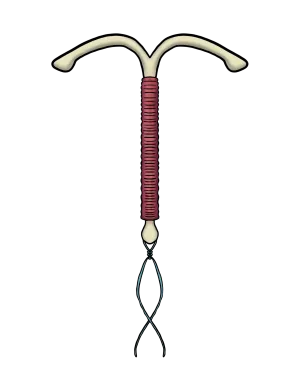
The copper IUD works by affecting sperm movement, preventing the fertilisation of an egg and may also prevent the implantation of a fertilised egg.
The copper IUD can be inserted at some sexual health clinics, gynaecologists and some GPs. You may need an appointment before the insertion.
It can be inserted within 120 hours (5 days) of unprotected sex and will also provide very effective long-term contraception.
It's highly recommended that you see your doctor or sexual health clinic 3 weeks after taking the pill to make sure that it has worked properly.
It is most likely to fail if any of the following situations occur:
- you are already pregnant
- you vomit within 2 hours of taking the pill
- you have unprotected sex after taking the pill.
EC does not protect against sexually transmissible infections (STIs). If you have unprotected sex, you and your partner may need to have an STI test.